
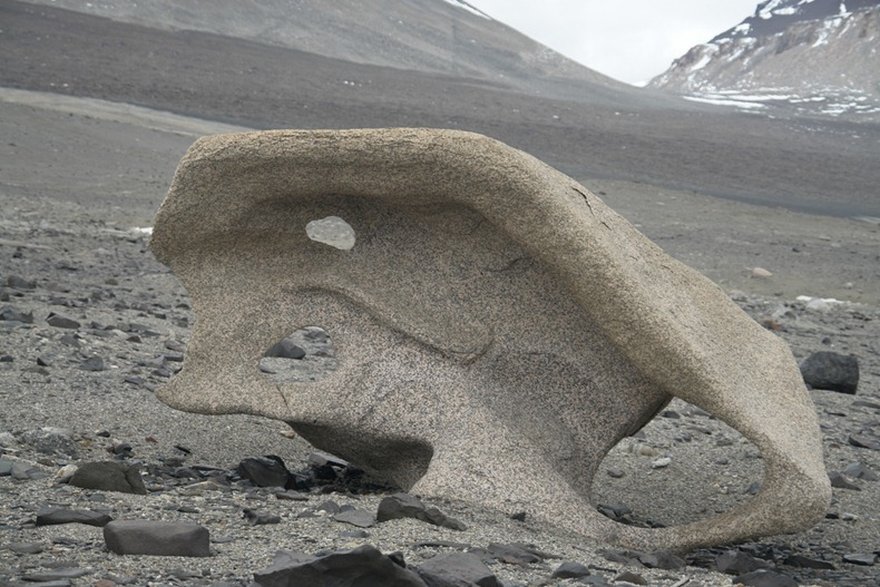
The Dry Valleys are so different from the rest of the continent because of its location. The Valleys are nestled between the mile-high Transantarctic Mountains which block seaward flowing ice from the East Antarctic ice sheet from reaching the Ross Sea.
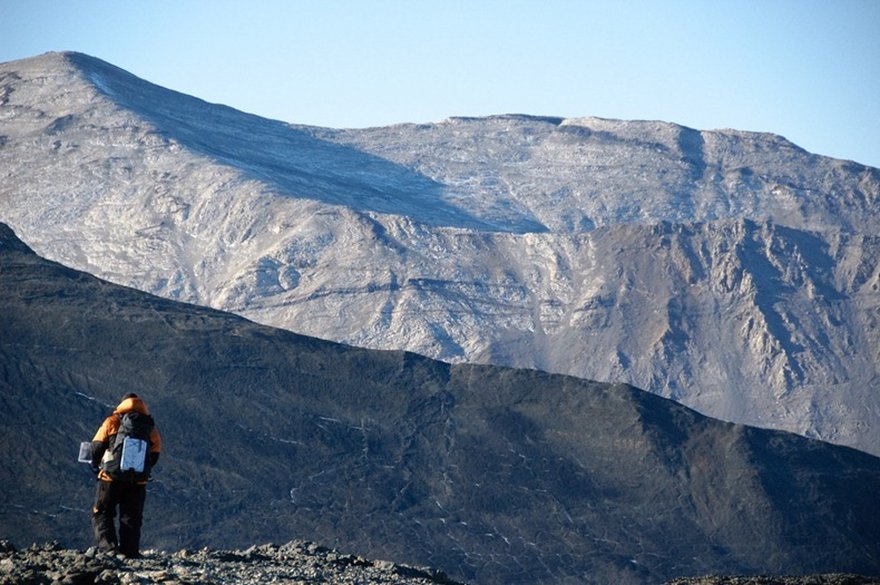
Several tongue-like glaciers creep through the gaps, but any ice that breaks off of the glaciers quickly goes from solid to vapor in the arid atmosphere. The unique conditions in the Dry Valleys are also caused, in part, by katabatic winds; these occur when cold, dense air is pulled downhill by the force of gravity. The winds can reach speeds of 320 kilometers per hour, heating as they descend, and evaporating all water, ice and snow.
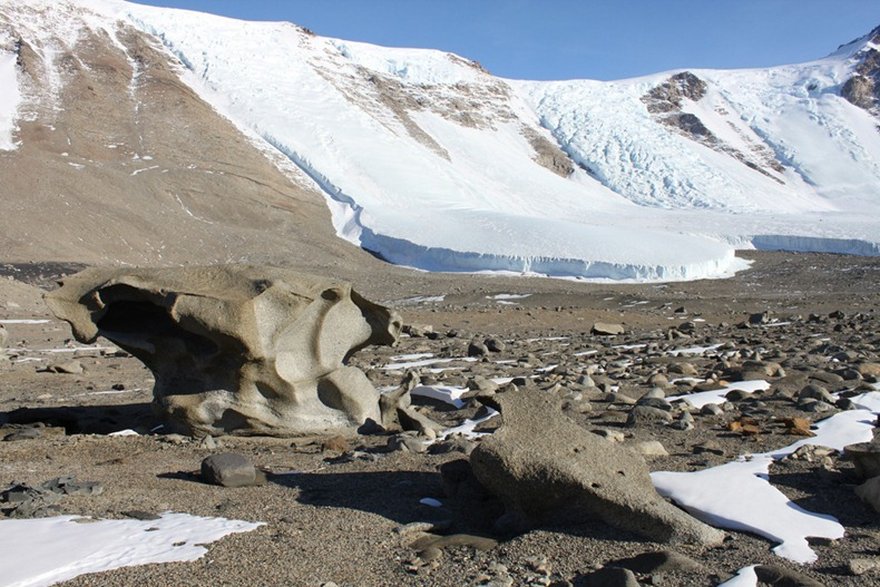
Initially, the Dry Valleys were thought to be lifeless. Not surprisingly, explorer Robert Scott, who discovered the Valleys in 1903, looked over one of them and called it, But Scott was wrong.
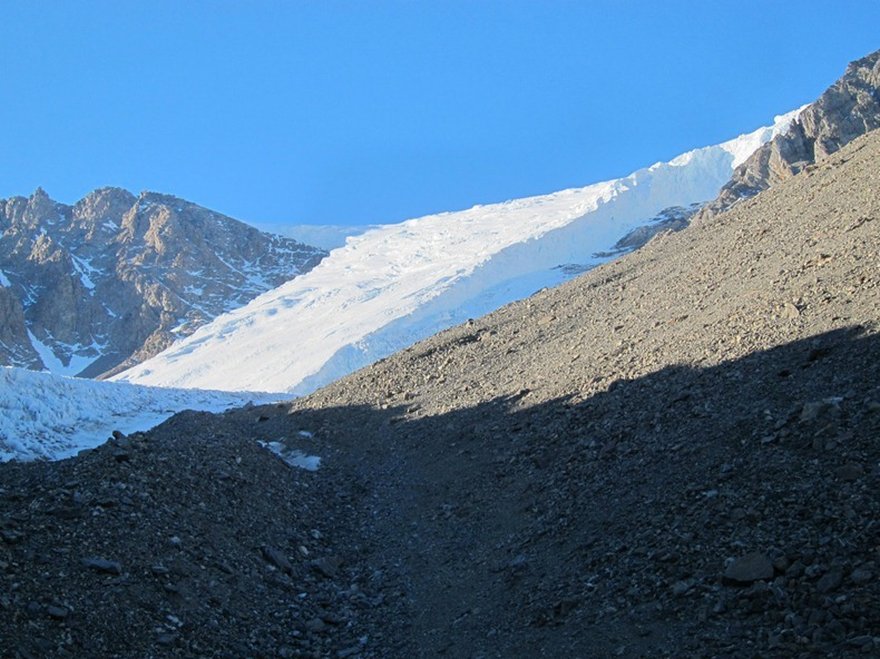
Researchers have discovered that the Dry Valleys are home to a variety of extremophiles (organisms that live in extreme environments). Among them are lichen and mosses, communities of microbes (including cyanobacteria), and nematodes (microscopic worms). These organisms have undergone profound changes that allow them to survive in one of the most punishing environments on the planet.
