
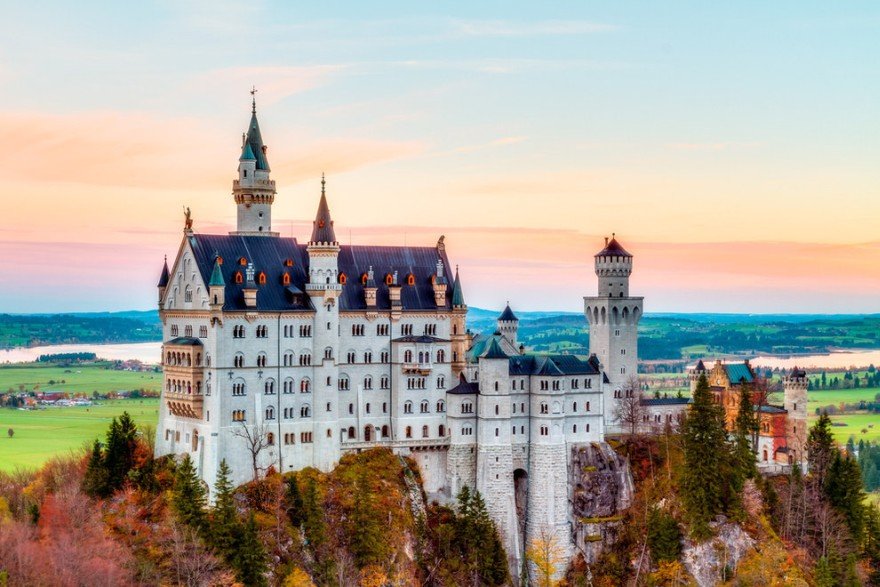
As a way to seek refuge and withdraw from public life, Ludwig II of Bavaria built this extravagant castle in 1868. Seven weeks after his death in 1886, the structure was opened to the paying public and has since become one of the most visited castles in Europe. Neuschwanstein is also the inspiration for the Sleeping Beauty castle in Disneyland, so it's clearly magical!
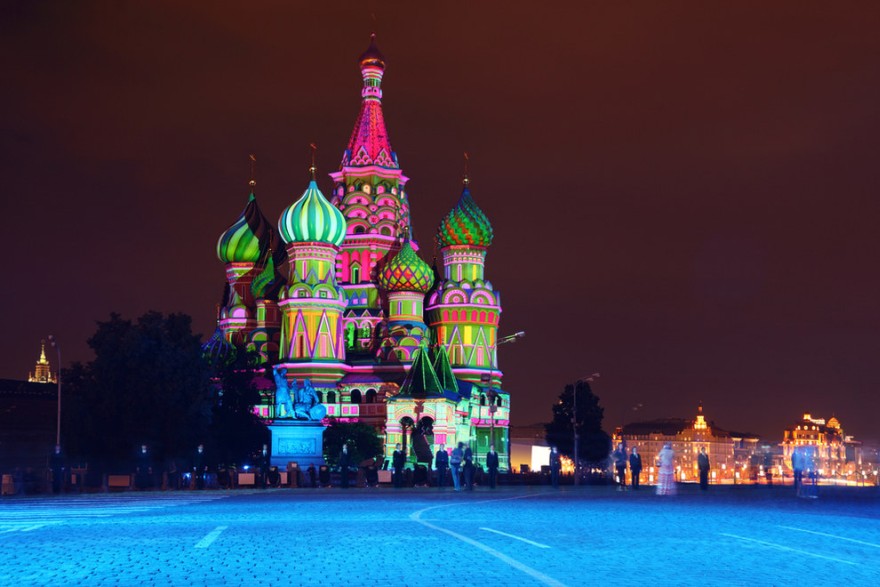
The Cathedral of Vasily the Blessed, located in Moscow, was formally a church but is now a museum. The spectacular range of bright colors and quirky architecture make it a whimsical must-see spot.

This specific spot in the Waitomo Caves is known as the Glowworm Grotto, a place where glowworms ignite a starry scenery on the ceilings and walls. This species is exclusively found in New Zealand and is around the size of a mosquito.

What looks like a canvas of extraordinary color is a range of mountains in China. The rainbow formation is the result of red sandstone and mineral deposits being laid down for over 24 million years.
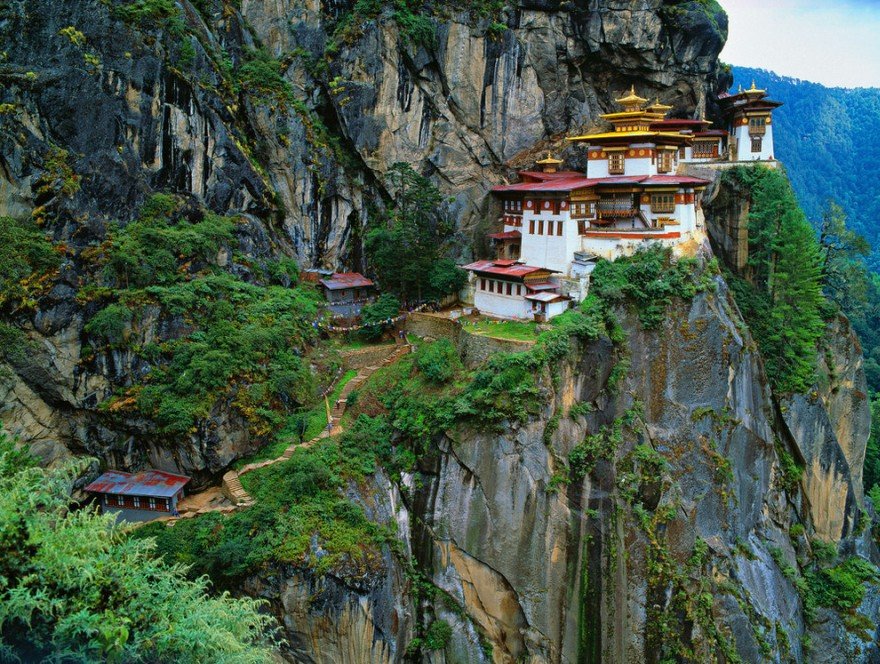
Known as the Tiger's Nest, Taktsang Palphug Monastery is a prominent Himalayan Buddhist sacred site perched upon the cliffside of the Upper Paro Valley. Its unique location is alarming but captivating, making it worthy of a visit.

An island commune in Normandy, France, Mont Saint-Michel is known as the "Wonder of the West" and attracts 3 million visitors per year. The Kingdom of Corona from Disney's Tangled was modeled after Mont Saint-Michel and is just as magical as the real thing.
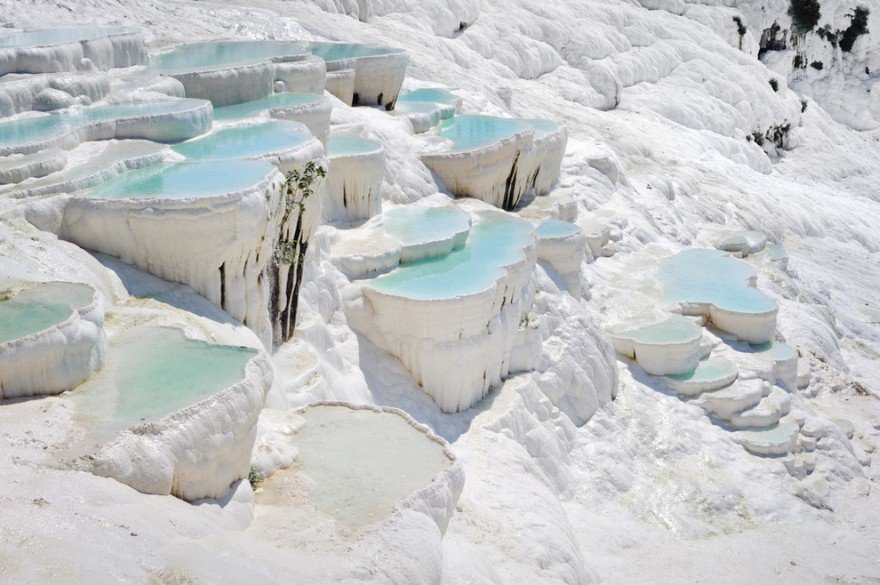
Pamukkale, or "Cotton Castle", is a natural site in southwestern Turkey that is home to hot springs and travertines, terraces of carbonate minerals left by the flowing water. People can relax in the small turquoise pools of bliss, but the terraces themselves are restricted to preserve the site.

Las Lajas Sanctuary was built between 1916 and 1949, this wondrous basilica church stands on a canyon in southern Colombia. This gorgeous structure surrounded by a pool of green is both striking and mystical.

What appears as a mirror image of the stars above, the bioluminescence in the water is actually due to marine microbes called phytoplankton. The effect it has on the shore is absolutely breathtaking and it encapsulates everything you'd imagine to be in a fairy tale. You can also experience this magical effect in Vieques, Puerto Rico.

This Neo-Renaissance castle is located in the Carpathian Mountains, built between 1873 and 1914. The Peles Castle was built at the initiative of King Charles I, with the purpose of serving as a summer home. The outside of the castle has a charming feel to it, but the inside is very royal-esque.